

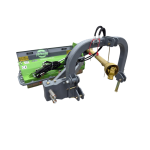
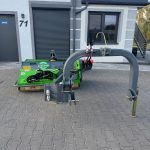
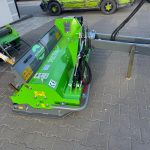
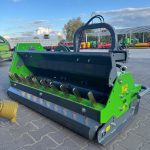
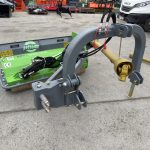
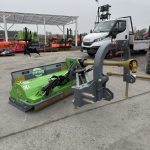
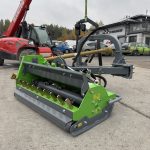
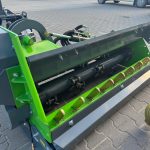
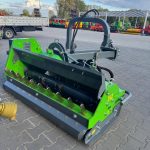
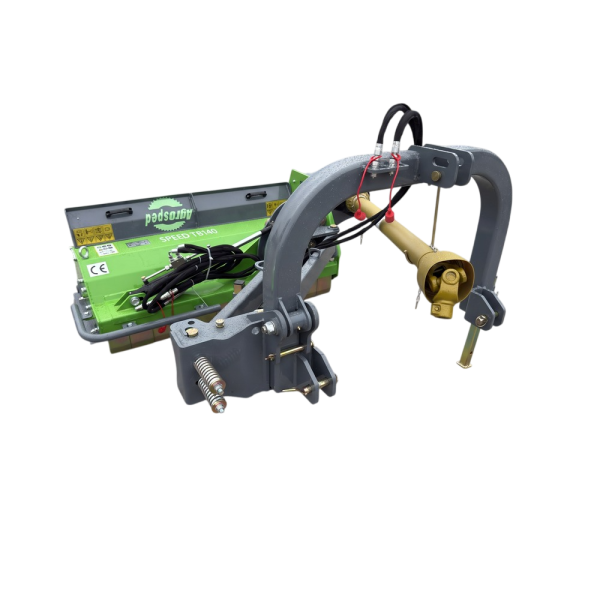
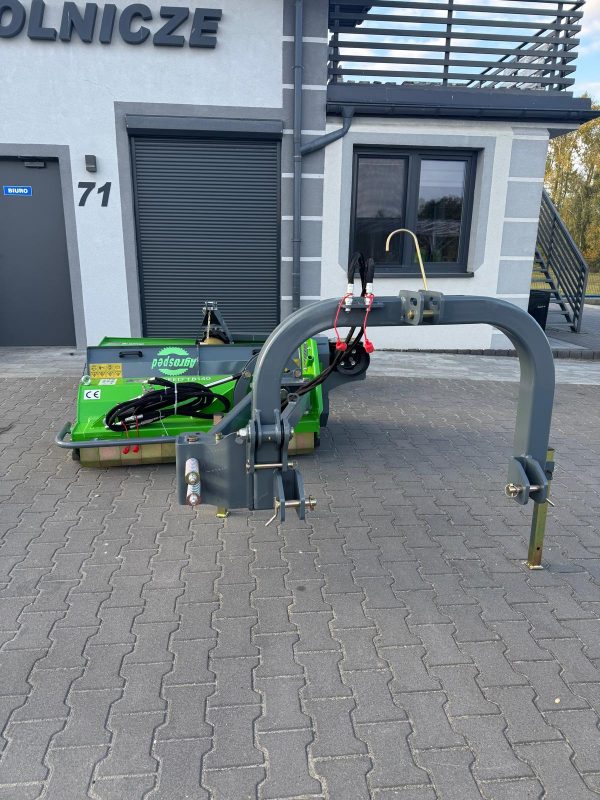
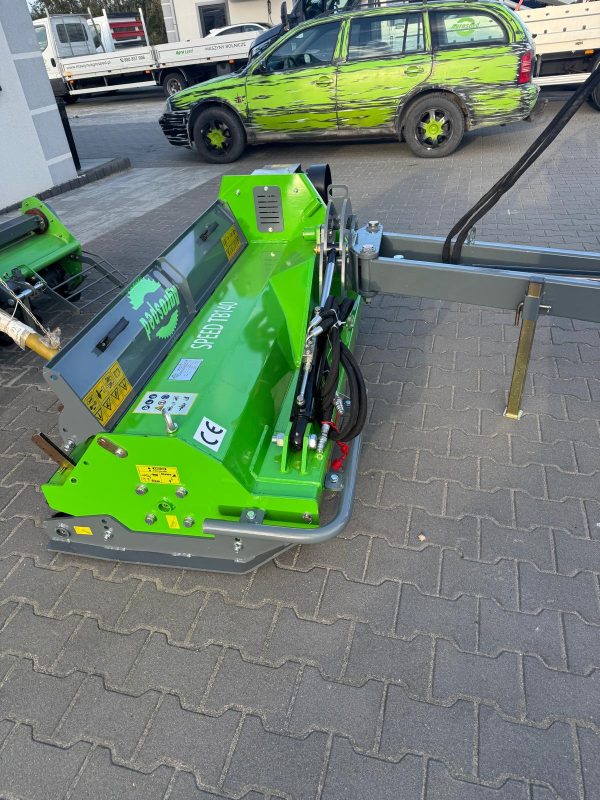
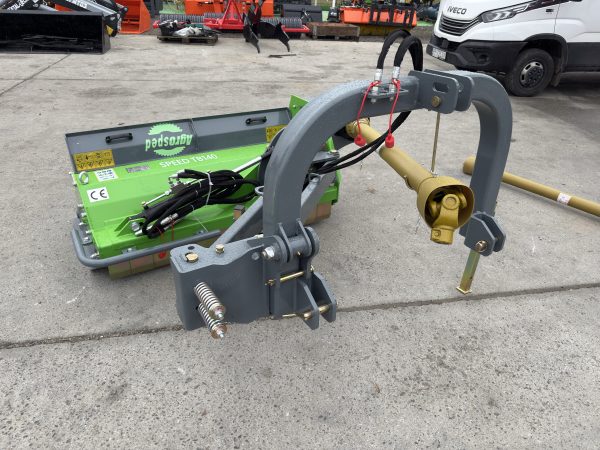
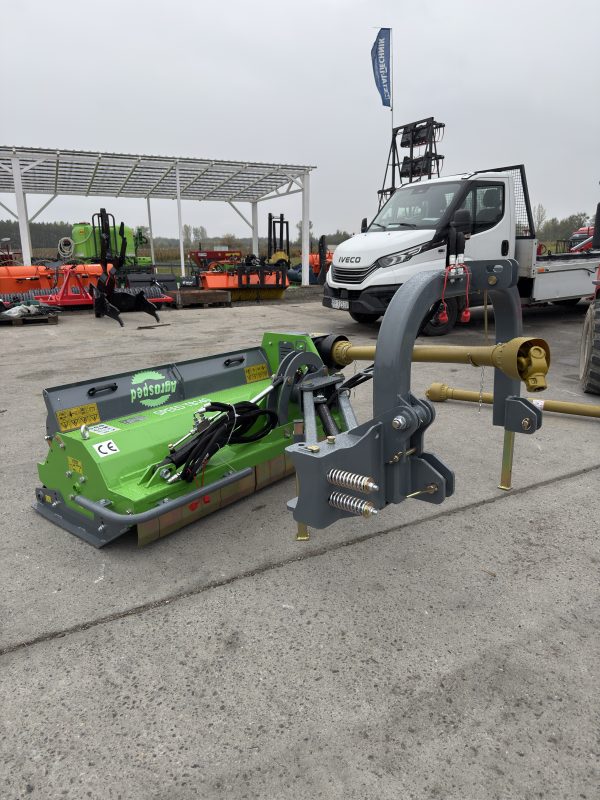
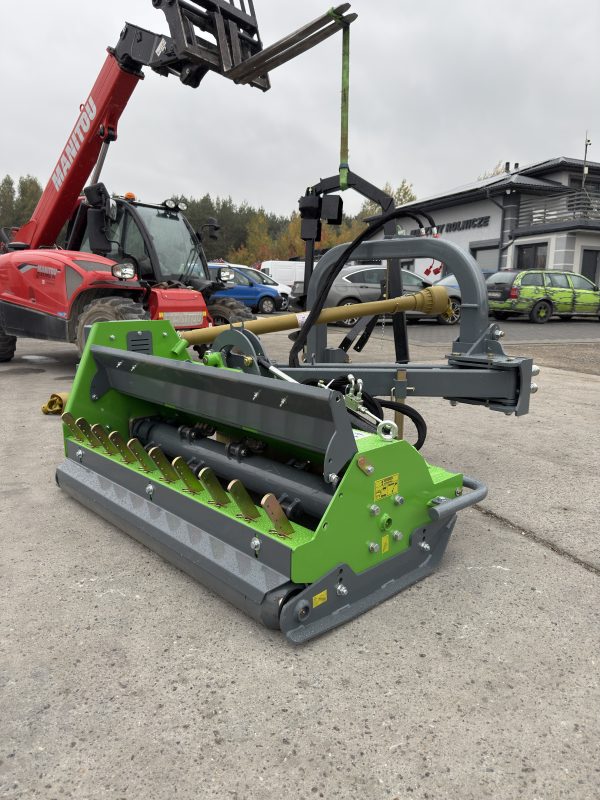
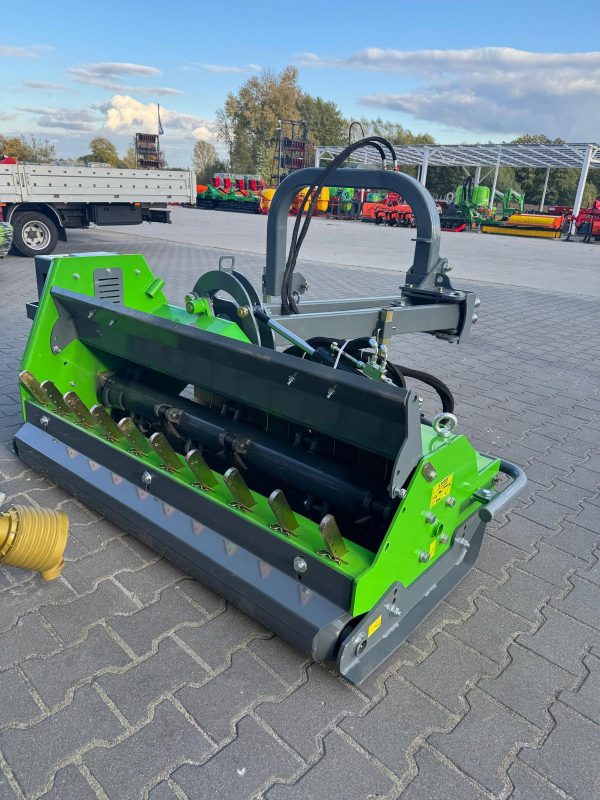
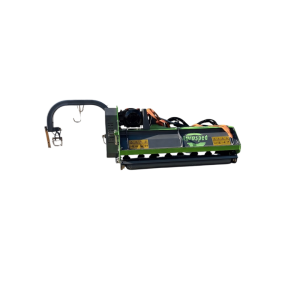
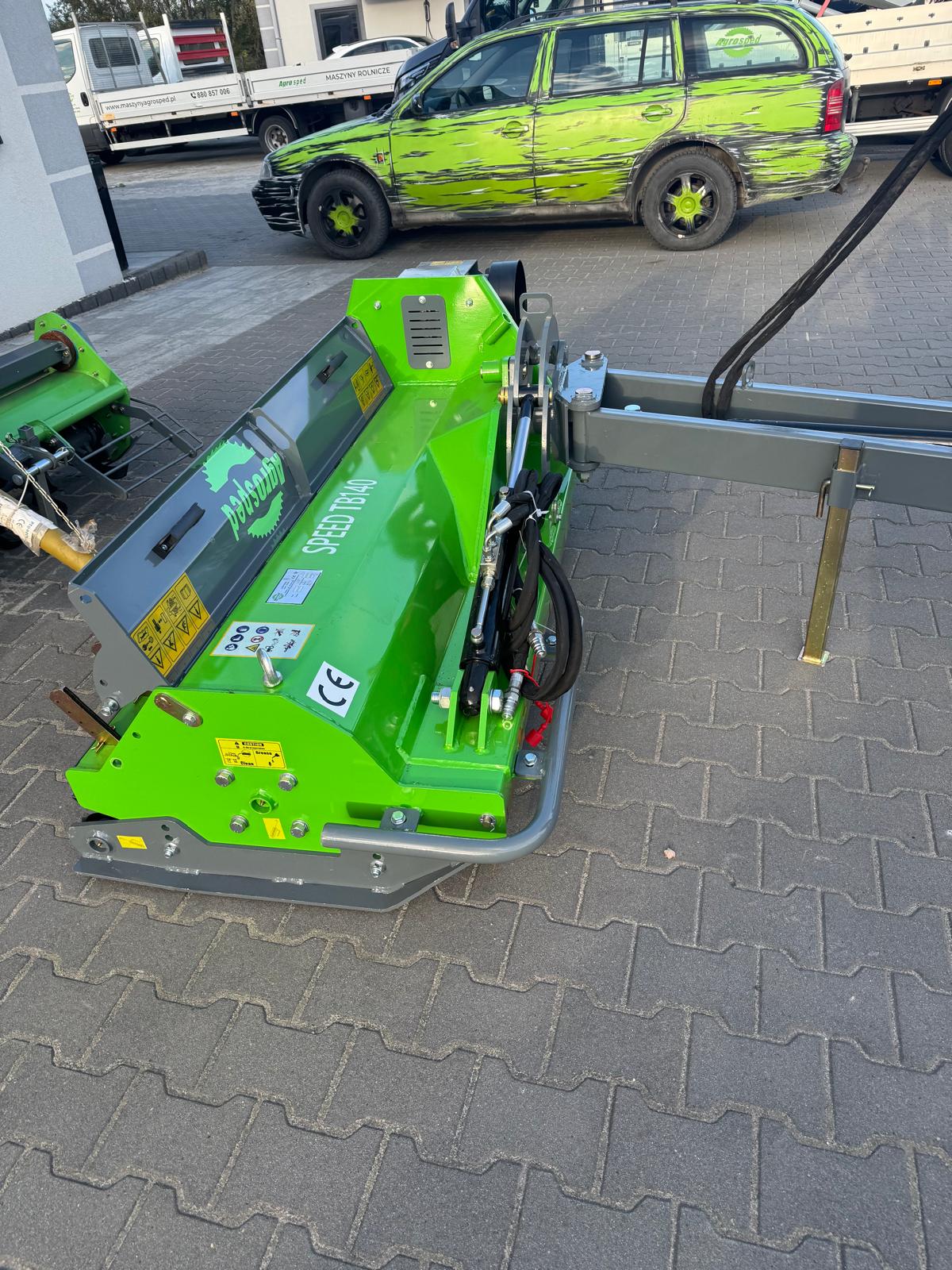
A rear-side flail mower (often referred to as a boom mower or side mower) is an agricultural and municipal machine mounted on a tractor’s three-point linkage (TPL). It differs from standard mowers in that it has a hydraulic boom, which allows the machine to operate both directly behind the tractor and well beyond its outline (to the side), as well as at steep angles both upwards and downwards.
Usage:The rear-side mower has been designed for specialised tasks where a standard mower would be unable to cope due to the terrain or the thickness of the undergrowth. It is mainly used for:
Usage:The rear-side mower has been designed for specialised tasks where a standard mower would be unable to cope due to the terrain or the thickness of the undergrowth. It is mainly used for:
- Mowing of roadside verges and drainage ditches: Thanks to its adjustable working angle (usually from approx. -60° to +90°), it adapts perfectly to the slopes of ditches and embankments.
- Maintenance of green spaces and wasteland: It copes exceptionally well with tall, overgrown grass, thick weeds and self-sown trees and shrubs.
- Orchard and garden maintenance: It allows you to mow the grass beneath the tree canopies without having to drive the tractor directly under the branches.
- Municipal works: For clearing verges, embankments, railway cuttings and areas around fences.
- Shredding of crop residues: The cutting elements not only cut but actually shred (mulch) the material, which speeds up its decomposition and fertilises the soil.
Design and construction:
This machine combines a robust mechanical design with an advanced hydraulic system. It consists of several key components:
1. Suspension system and arms (boom)
- Mounting frame: Used to attach the machine to the tractor via the three-point linkage.
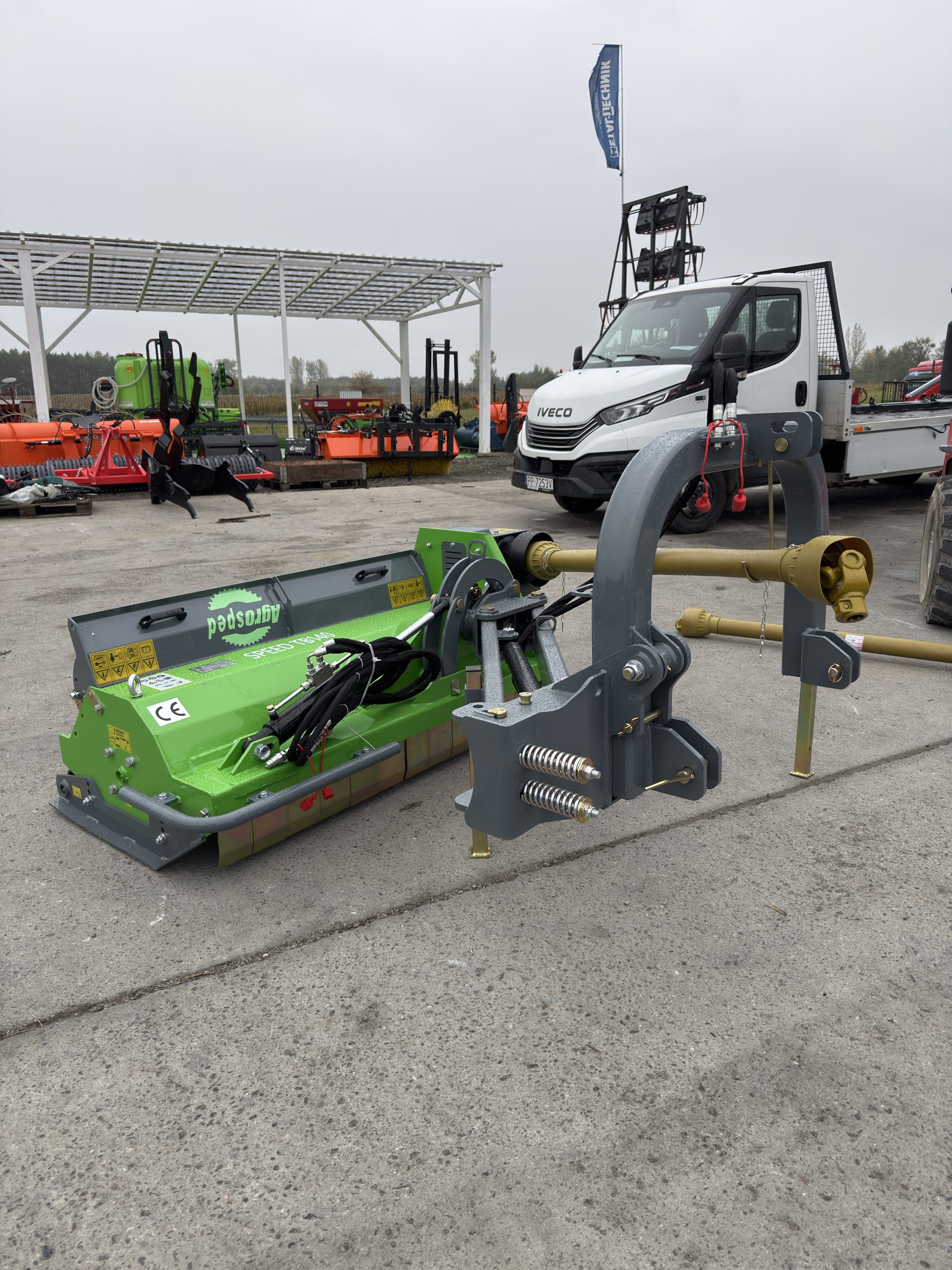
- Pantograph arm / parallelogram arm: A system of arms controlled by hydraulic cylinders. This system is responsible for extending the mower out to the side (beyond the tractor’s outline) and adjusting the angle of the mower head.
This machine combines a robust mechanical design with an advanced hydraulic system. It consists of several key components:
1. Suspension system and arms (boom)
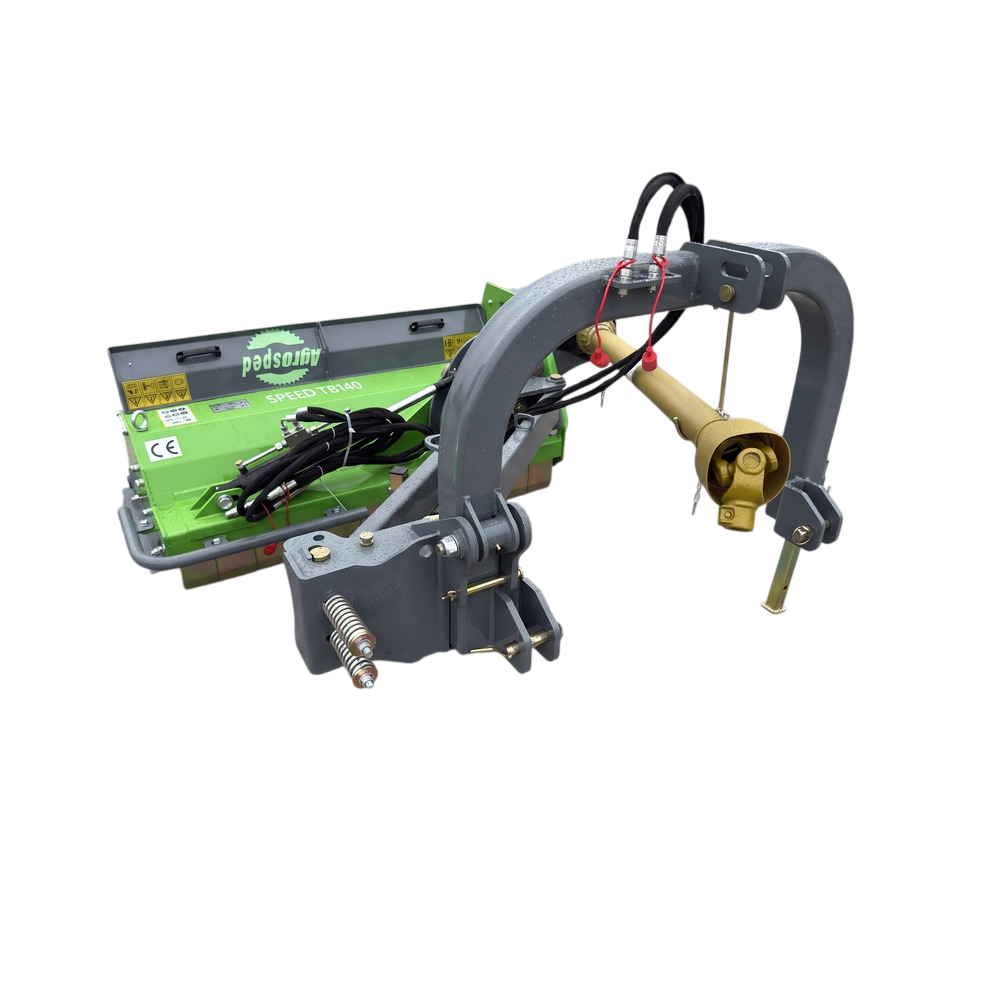
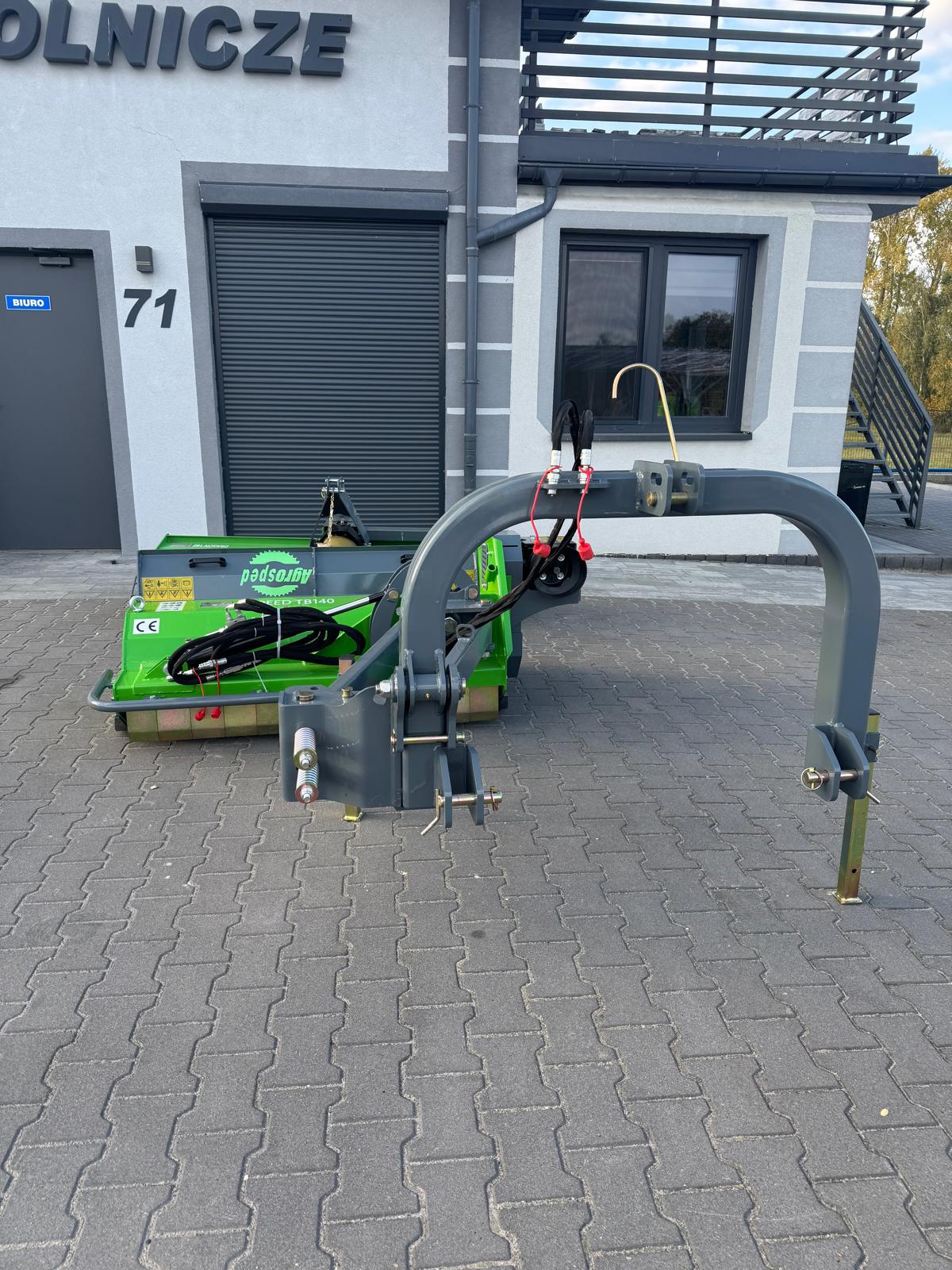
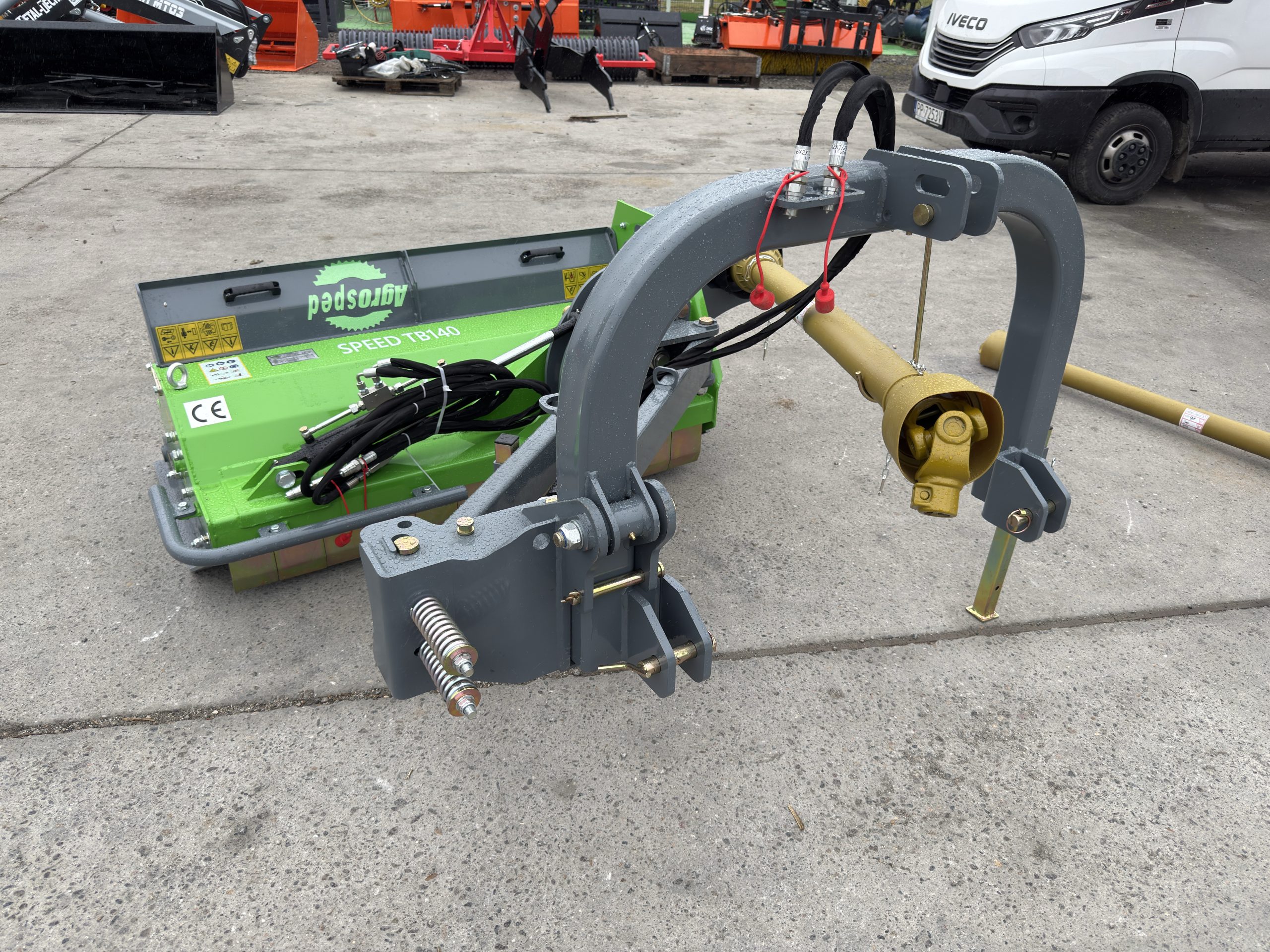
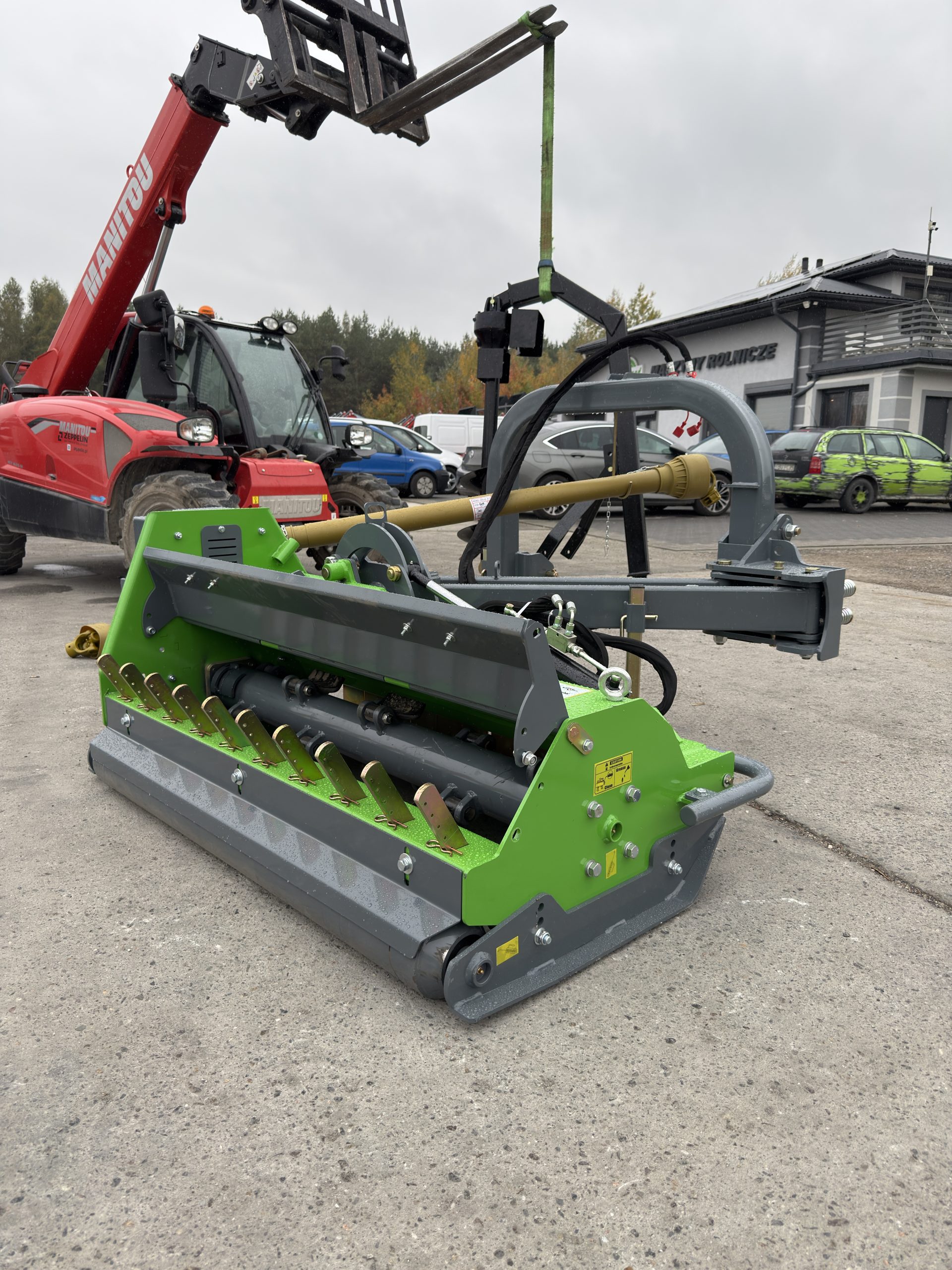
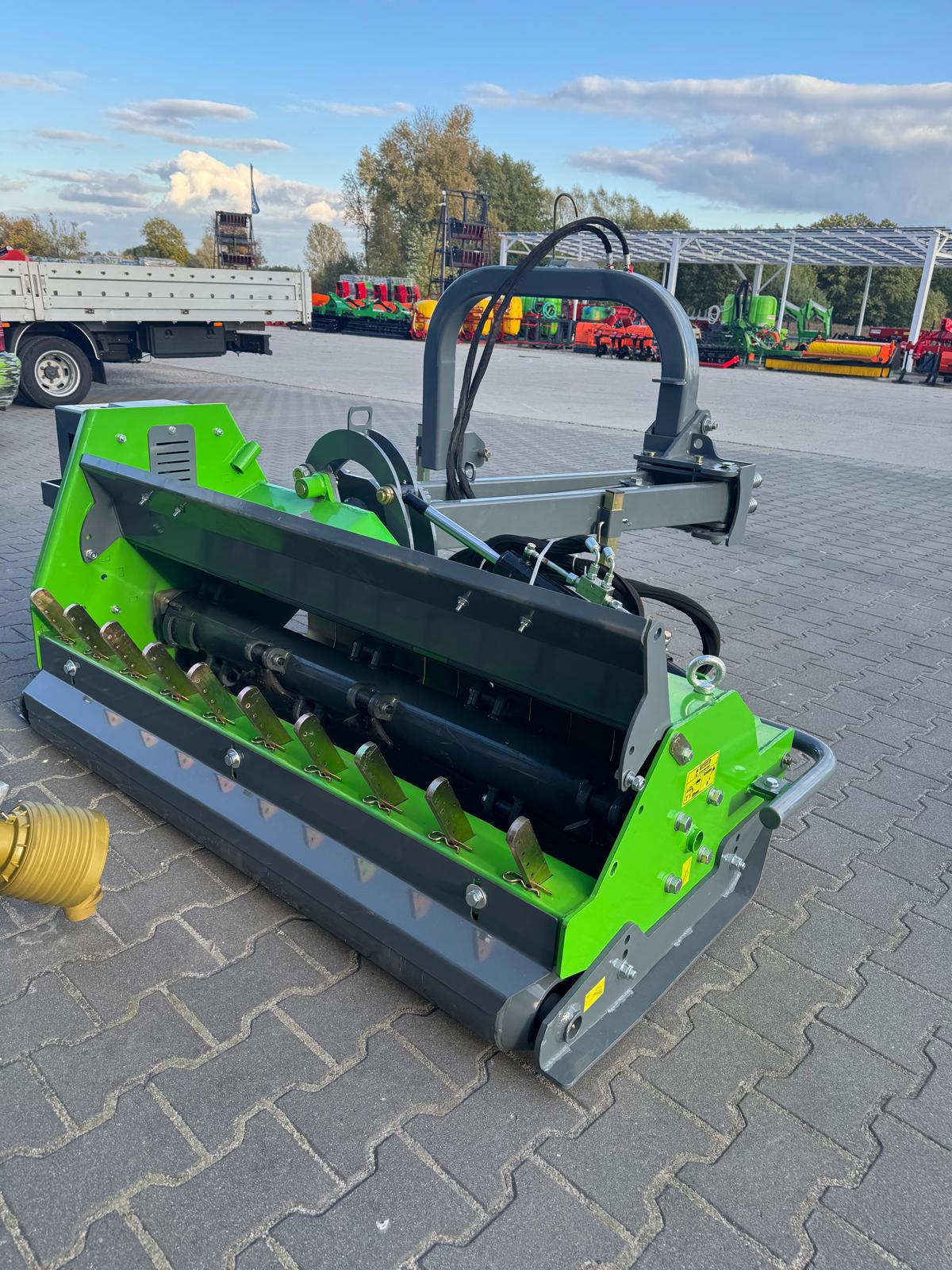
- Mounting frame: A heavy-duty mounting frame (in the shape of an inverted U) used to attach the machine to the tractor’s three-point linkage.
- Pantograph arm / parallelogram arm: A long horizontal arm with hydraulic cylinders extends from the frame. Thanks to this design, the mower can be extended fully to the side to mow, for example, ditches or embankments, whilst the tractor drives safely on the tarmac.
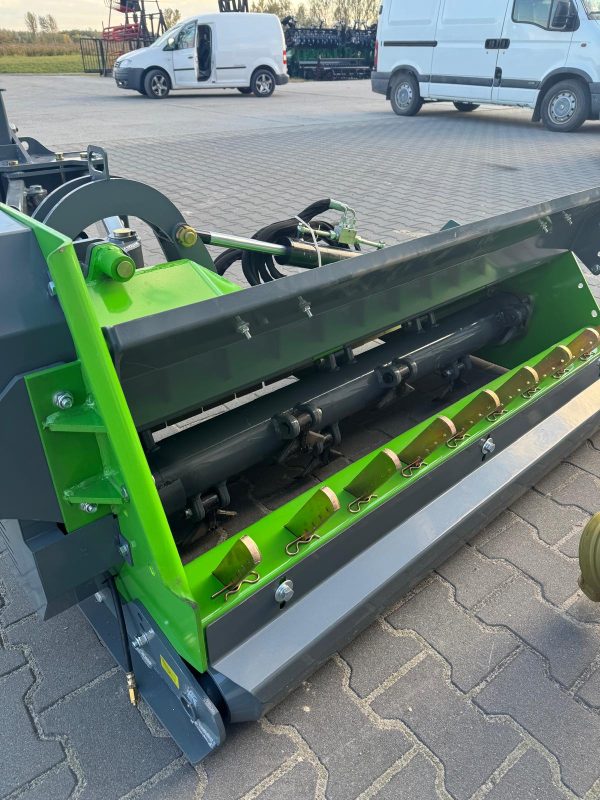
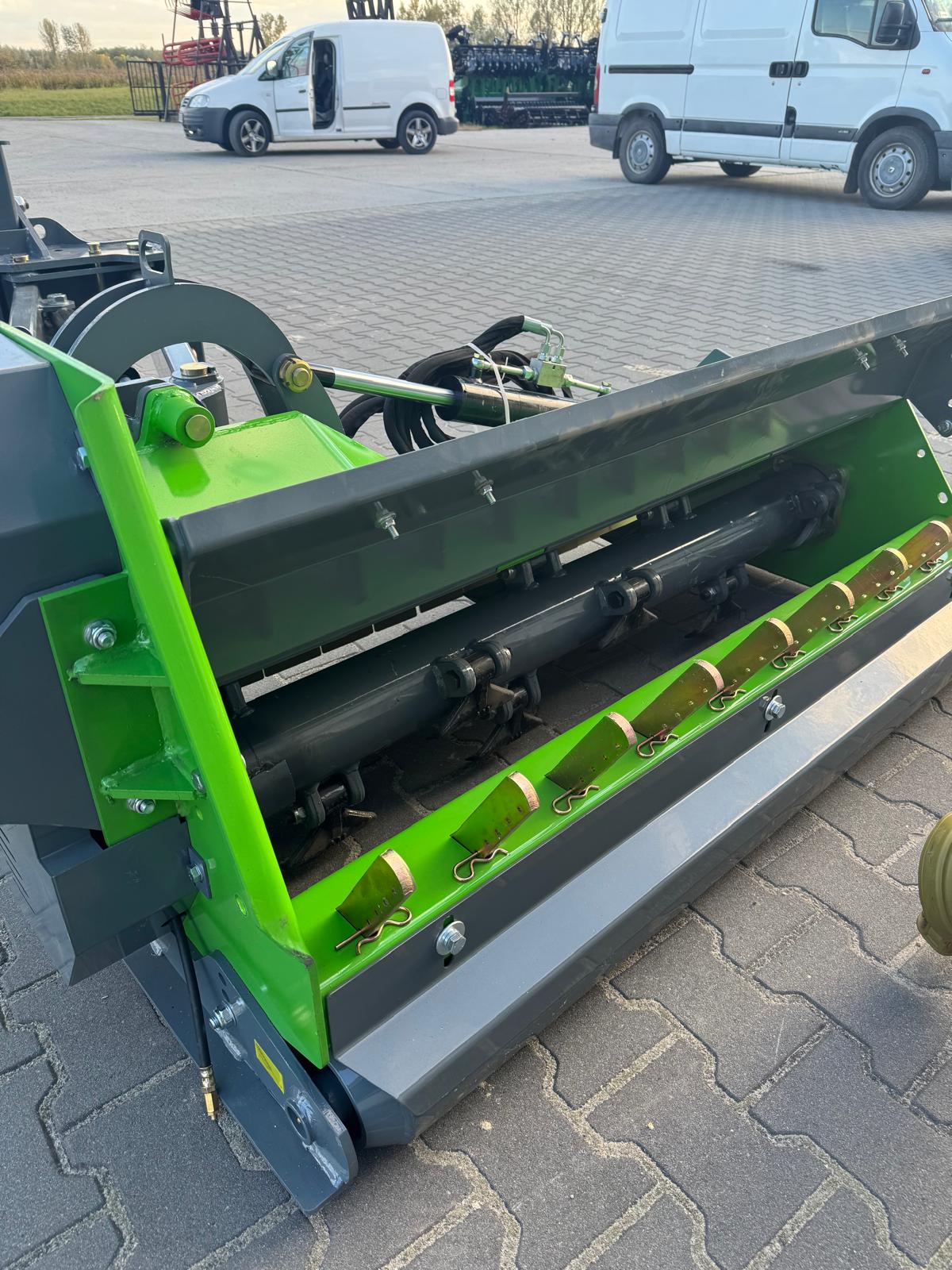
- Body (housing): Made from thick, durable steel. It protects the operator and bystanders from stones thrown up by the rotating shaft.
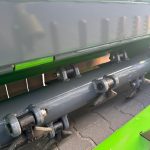
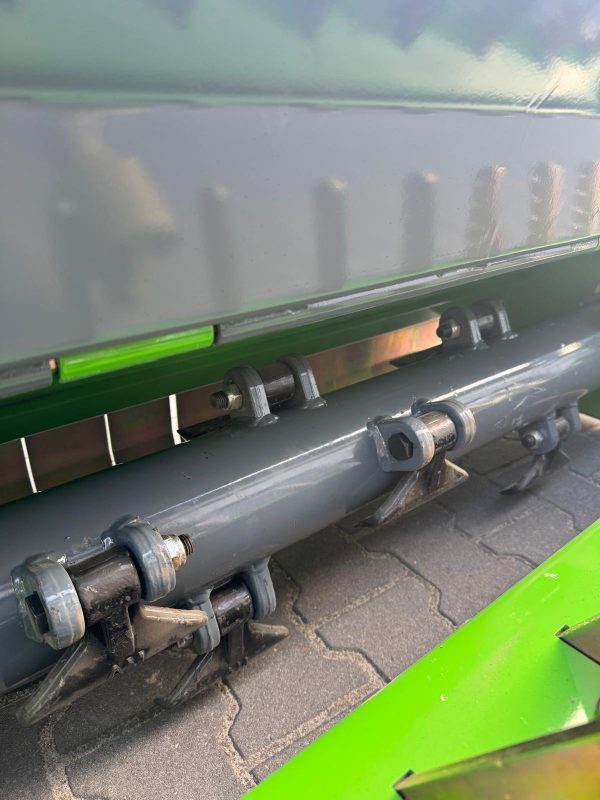
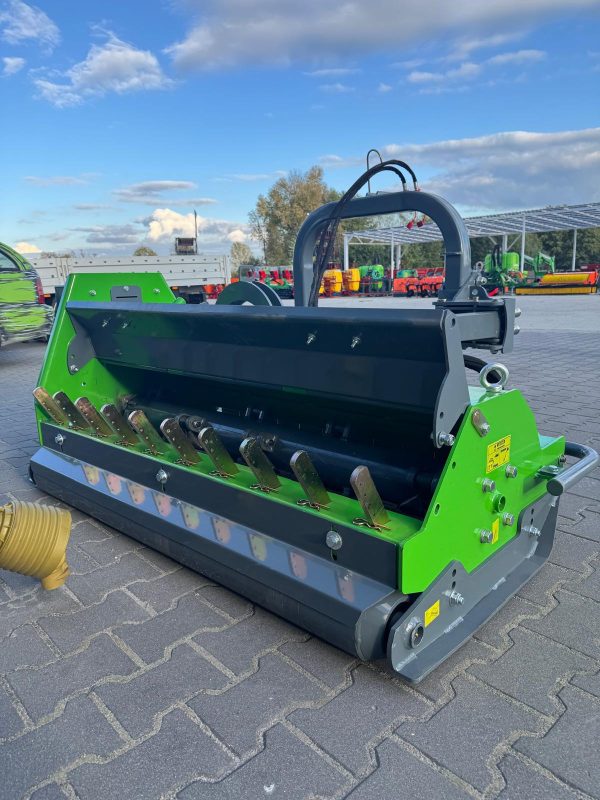
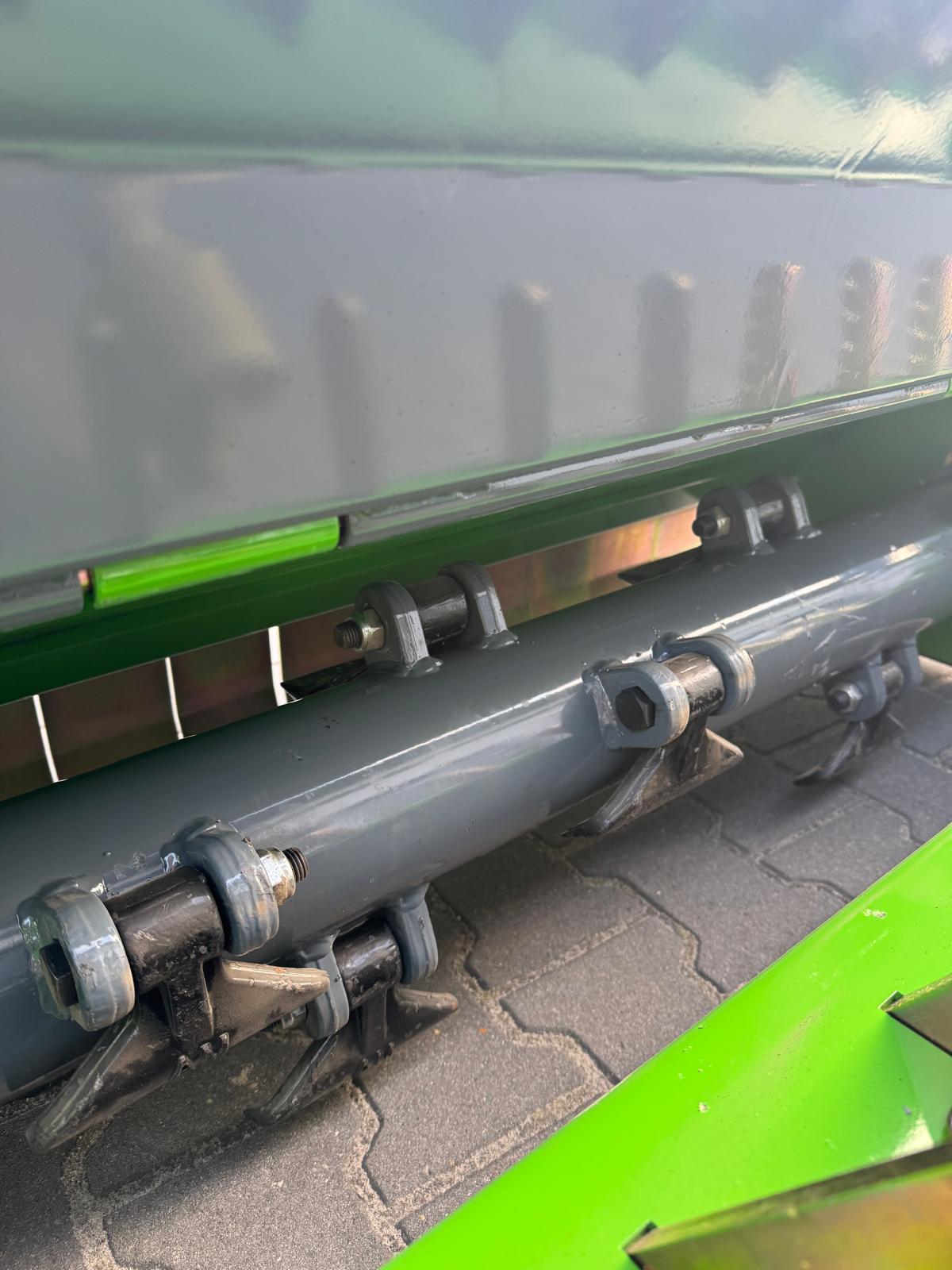
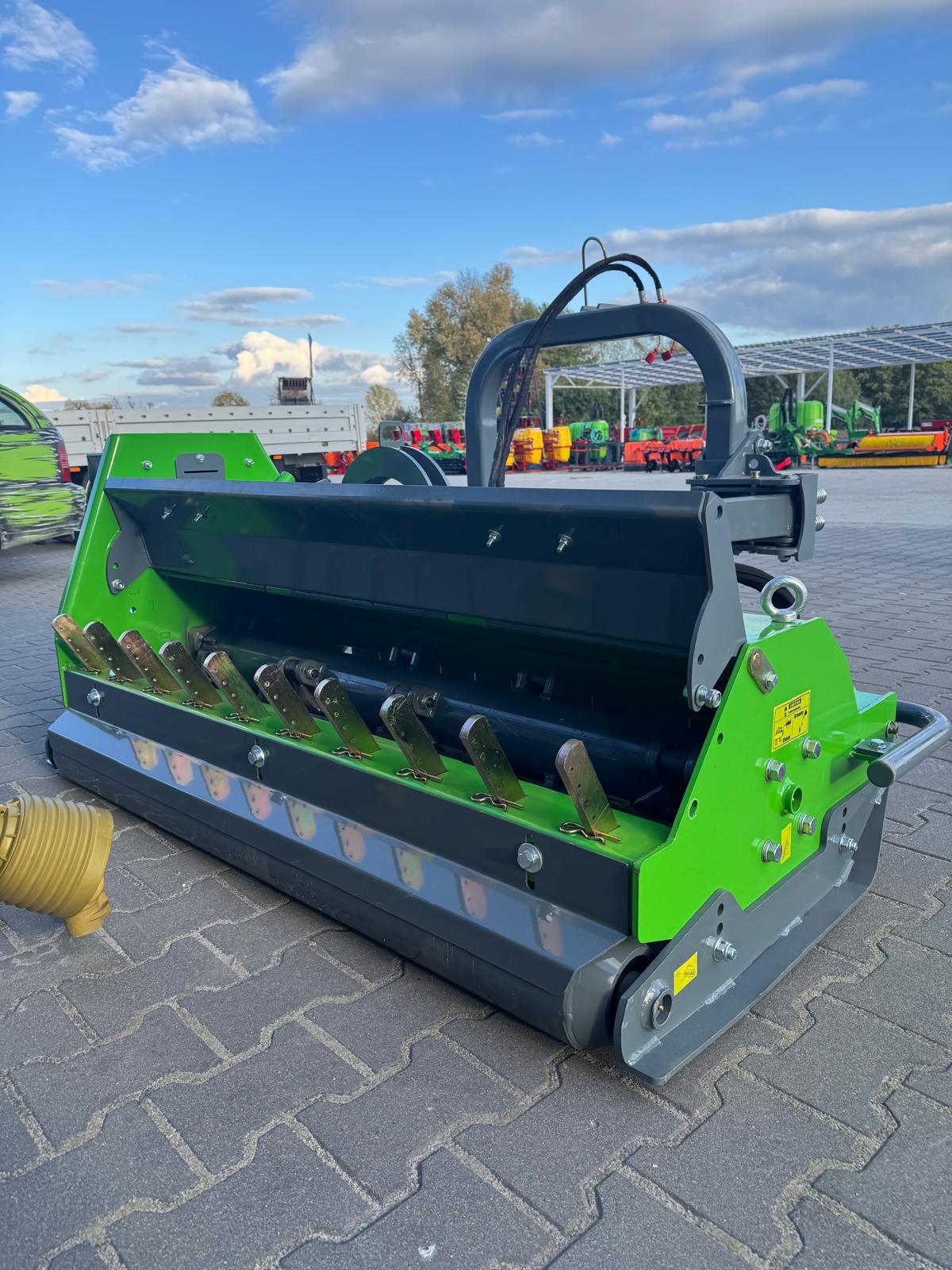
- Working shaft (beater): A thick-walled, dynamically balanced shaft positioned horizontally inside the housing. It rotates at a very high speed.
- Cutting elements (beaters): They are loosely mounted on the shaft. Under the influence of centrifugal force, they straighten out and strike the vegetation.They effortlessly cut through woody shoots, branches (even up to several centimetres in diameter) and dense undergrowth.
- Safety curtains: At the front of the cutting chamber, there are movable metal flaps (curtains) which prevent stones from being dangerously ejected towards the tractor or the surrounding area.
3. Drive system
- Main (bevel) gearbox: It receives power from the tractor’s PTO (Power Take-Off) shaft and transmits it onwards. It features a built-in one-way clutch (freewheel) which protects the tractor’s drive from sudden stoppage of the mower shaft.
- Belt drive: Power is transmitted from the bevel gearbox to the beater shaft via several V-belts. The belts also act as a safety mechanism – if the machine strikes, for example, a thick tree trunk or a stone, the belts will start to slip, protecting the engine and gearbox from damage.
4. Copy elements and security measures
- Copy roller (rear): Located at the rear of the cutting deck. It sets the cutting height above the ground and compacts the cut material.
- Side skids (skids): They protect the sides of the mower from digging into the ground and make it easier to manoeuvre the machine over uneven ground.
- Mechanical protection (fuse): A special system (e.g. spring-loaded or breakaway) which, should the mower strike an obstacle (e.g. a concrete post hidden in the grass), allows the entire machine to swing backwards, thereby minimising damage.
- Protective covers: Metal curtains (flaps) or chains are fitted to the front of the mower to prevent debris and stones from being ejected from beneath the machine.




Reviews